

Jimmy Cliff, the Man Who Taught Reggae to Travel
His Grammy-winning records as well as his starring role in the cult movie “The Harder They Come” in 1972 boosted a career spanning seven decades.
The death of Jimmy Cliff at 81 feels less like the end of a career and more like the dimming of a lighthouse that guided reggae music out of the narrow harbours of Kingston and into the crowded ports of the world. Before reggae became a global language carried by the mystique of Bob Marley, it was Cliff who first pushed Jamaican music through the customs gate of international culture. His passing leaves reggae with a silence that echoes from Trenchtown to Lagos, from London to Rio.
Jimmy Cliff emerged from the turbulent flowering of Jamaican music in the early 1960s when ska was still dancing with the quick-footed urgency of a nation discovering its independence. Ska then slowed into rocksteady before reggae found its deeper pulse, like a heartbeat settling after a sprint. Cliff moved through those transitions with unusual grace. Unlike many artists trapped inside one rhythm, he understood that Jamaican music was not a museum piece. It was a living street conversation. Songs like “Hurricane Hattie” announced a precocious talent, but “Many Rivers to Cross” revealed an artist capable of turning private pain into public testimony.
What separated Cliff from many of his contemporaries was his openness to melody beyond the Caribbean shoreline. He folded soul, gospel, African rhythm and pop accessibility into reggae without draining its rebellious spirit. His voice carried a brightness that could soften sorrow without denying it. Even his protest songs sounded hopeful, as though resistance itself was an act of faith. Bob Dylan once praised Cliff’s “Vietnam” as one of the greatest protest songs ever written, and that admiration was deserved because Cliff never screamed slogans. He sang convictions.
His contribution to film remains one of the most underrated revolutions in popular culture. The Harder They Come did not merely entertain audiences. It introduced reggae to people who had never heard the language of Kingston’s streets. Cliff’s portrayal of Ivan was raw and magnetic, a portrait of ambition, poverty and defiance wrapped in music that sounded like prophecy. The film gave reggae an image to accompany its sound. It also shattered the postcard fantasy of Jamaica as merely beaches and rum cocktails. Through Cliff, the world encountered a harsher and more truthful Caribbean reality.
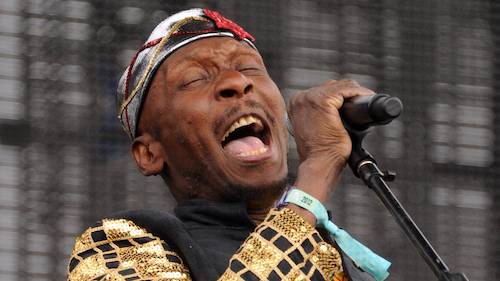
On stage, Jimmy Cliff performed like a man permanently connected to an invisible current. He danced with the sharpness of ska, preached with the urgency of gospel and smiled with the ease of a street philosopher. His concerts were never passive recitals. They were communal eruptions. Audiences in Europe, Africa and the Americas responded not simply to reggae grooves but to the emotional generosity of his performance. He carried himself like an ambassador who believed music could lower borders faster than diplomacy.
Nigeria held a special fascination for Cliff and for reggae itself. Reggae always found fertile emotional ground in Africa because its themes of dignity, struggle and spiritual endurance mirrored postcolonial realities across the continent. Jimmy Cliff was arrested in Lagos, Nigeria, in 1974 and was detained for three days following a civil lawsuit filed by a local music show promoter, who alleged that the musician had breached a performance contract. Cliff maintained that the contract was fabricated. A Nigerian court dismissed the lawsuit due to a lack of evidence. [
Cliff ultimately turned the traumatic arrest into art, channeling the ordeal into his 1976 hit song, “The News” (Have You Heard the News).The episode only deepened his mythology among African fans.
From the 1980s onward, Cliff’s music evolved with changing times without surrendering its centre. “Reggae Night” embraced danceable commercial energy while his later recordings explored spiritual reflection and social commentary with elder-statesman calm. Unlike some veterans who became trapped inside nostalgia circuits, Cliff continued searching for relevance. His Grammy-winning later work proved that reggae could age without becoming brittle.
The inevitable comparison with Bob Marley remains complicated. Marley became the larger myth, the face on dormitory walls and revolutionary banners. But Jimmy Cliff was arguably the first true international architect of reggae’s expansion. Marley universalised reggae. Cliff internationalised it. Without Cliff opening foreign ears and cinema screens to Jamaican music, Marley’s later explosion might have arrived differently, perhaps even more slowly.
Now reggae faces a strange horizon. The deaths of its foundational giants threaten to leave the genre floating between heritage and reinvention. Jamaica still produces gifted artists, but the moral thunder and global symbolism carried by figures like Cliff are increasingly rare. His death reminds the world that reggae was never only entertainment. It was testimony wrapped in rhythm, survival translated into melody. Jimmy Cliff carried that testimony across oceans for more than six decades, and reggae’s passport still bears his fingerprints.
David Danisa, with reports by Bitjoka Étienne Alexandre